Focus on Diversity Purpose Benefits of Conference Presentations and Panels Become a Conference Sponsor Featured Contributors About Fledging Birders |
| . |
Search fledgingbirders.org

Home For Birders For Teachers Fledging Birders Challenge Programs
| Bringing the joy AND BENEFITS of birding to our youth - to promote their healthy development and bird conservation. |

| Fledging Birders Institute P.O. Box 1774 Bellmawr, NJ 08099 logo developed by aclogodesign@aol.com Osprey, Northern Cardinal, and Great Blue Heron images courtesy of www.scottelowitzphotography.com |
| A Focus on Diversity: Changing the Face of American Birding March 25, 2017 Patuxent Research Refuge Laurel, Maryland |


Check out Blair Underwood's Funny or Die clip to get a sense of what we're looking to
address at the conference! Of course, you could substitute "birder" for "hiker".
address at the conference! Of course, you could substitute "birder" for "hiker".
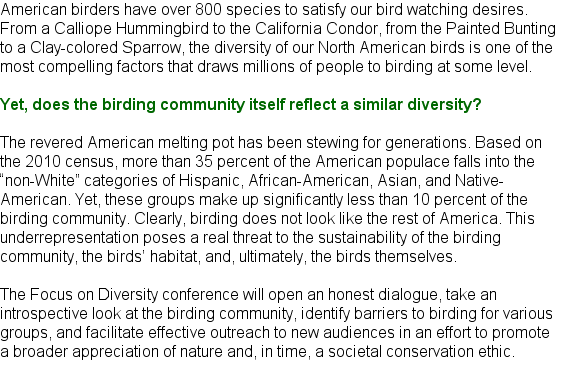
| |||||||||||||||

| The Focus on Diversity Conference is being made possible through the support of... American Birding Association BirdWatcher's Digest Clemson University Eagle Optics Great Birding Projects Houghton Mifflin Harcourt Kaufman Field Guides Minnesota River Valley Audubon Chapter Stackpole Books U.S. Fish and Wildlife Service Wild Bird Centers of America Sponsorship opportunities for the Focus on Diversity Conference are available! |